Before & After — What Soft Washing Achieves
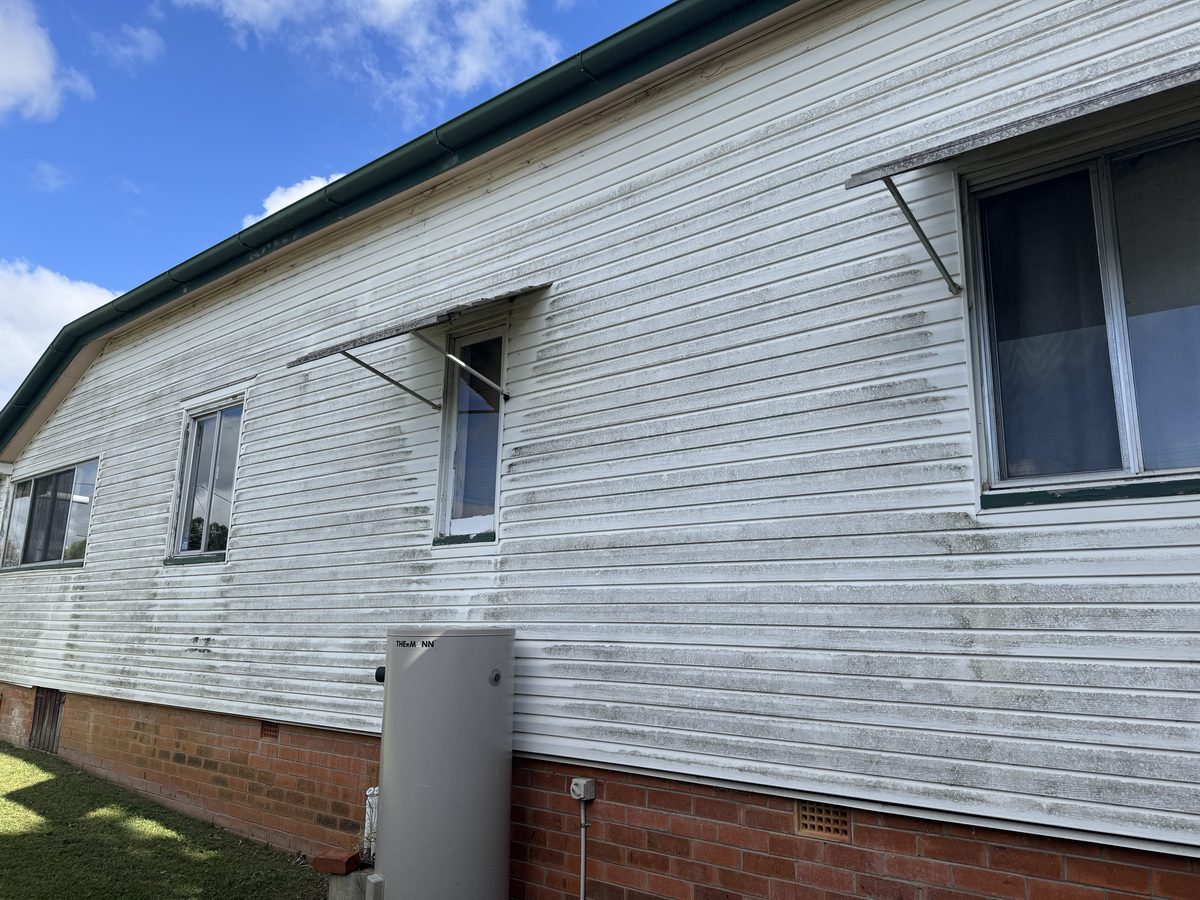
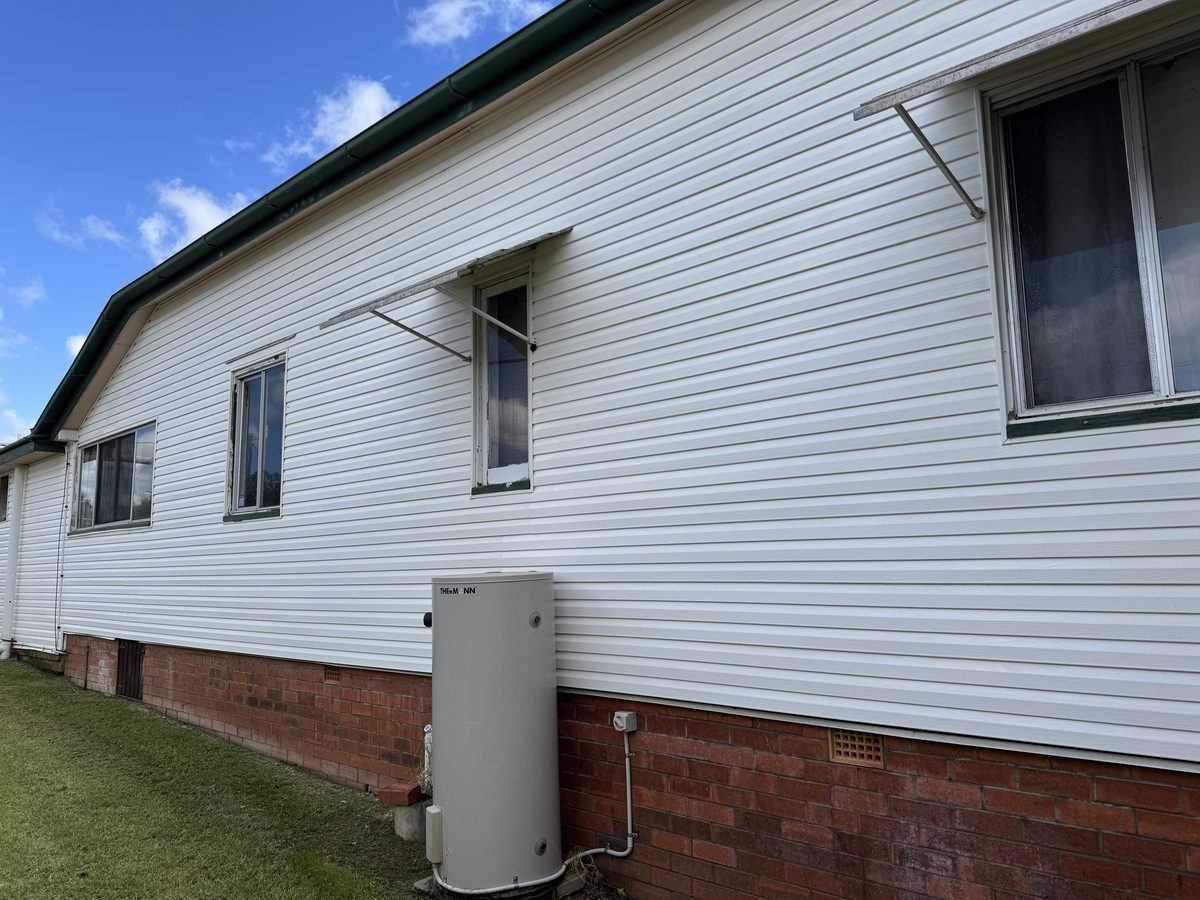
Real results from a recent job. Soft wash kills biological growth at the root — results last 12 to 24 months, not the 3 to 6 months you get from pressure washing alone.
Why Rendered Walls Go Green, Black and Brown
Rendered walls are one of the most common exterior finishes on Queensland homes — acrylic render, cement render and texture-coated surfaces are everywhere from Capalaba to Kingaroy. They look stunning when new. But render's slightly porous surface is also a perfect substrate for biological growth, and Queensland's subtropical climate accelerates it. Within 2–5 years of application, most rendered walls in SEQ show visible staining, green algae growth or dark streaking that regular hosing does nothing to fix.
The most common render discolouration — a green, blue-green or yellow-green staining that typically appears on south-facing walls and shaded sections first. Algae thrives on the moisture and organic matter that settles into render's texture. Regular hosing spreads the spores rather than killing them. Our soft wash kills algae at a cellular level — it cannot regrow from dead organisms.
Dark grey or black streaking, often running from window reveals, roofline joints and control joints downward. Caused by Gloeocapsa magma and black mould species that colonise the render surface. Particularly common below gutterlines and around areas with moisture ingress. Requires chemical treatment — pressure washing alone removes the visual staining but leaves the root system intact for rapid regrowth.
White, crystalline or powdery deposits on render surfaces — caused by water-soluble salts migrating through the render and depositing on the surface as water evaporates. Common on coastal properties near Redlands and Raby Bay where salt air accelerates the process. Requires a different treatment approach from biological staining — we assess each property and recommend the correct method.
Why Render Cannot Be Pressure Washed
This is where most render cleaning jobs go wrong. High pressure washing on rendered walls is one of the most common causes of costly render damage in Queensland. Here's what happens at the physics level.
What Pressure Does to Render
Acrylic render — the most common type on modern Queensland homes — is a flexible polymer-based coating nominally 1.5–3mm thick. At pressures above 800–1,000 PSI directed at an angle, the water jet can delaminate the render from the substrate, particularly at control joints, corners and window reveals where the render is most vulnerable.
Cement render is even more vulnerable. Its rigid structure means it cannot flex under pressure impact — instead it micro-cracks at the surface, creating pathways for water infiltration that cause subsurface moisture, paint delamination and in severe cases, structural dampness inside the wall cavity.
On both render types, high pressure forces water into any existing hairline cracks, joints or penetrations — expanding existing damage and creating new pathways for moisture. We have seen pressure washing turn a $400 cleaning job into a $3,000–$8,000 render repair.
Why Soft Washing Works
Our soft wash system applies cleaning solution at 50–100 PSI — less pressure than a garden hose. There is no physical force capable of delaminating render, cracking the surface or forcing water into joints. The cleaning is entirely chemical — the solution penetrates the biological growth, kills it at the root, and the dead material rinses away with low-pressure water.
The result lasts significantly longer than pressure washing — 12 to 24 months in Queensland conditions before any noticeable regrowth — because we've killed the root system rather than just removing the surface layer. The same spores that were left behind by pressure washing can regrow visible staining within 3–6 months.
Before we apply any solution, we inspect the render for existing cracks, delamination or moisture issues. If we find anything that could be worsened by cleaning, we'll tell you honestly and recommend repair before proceeding.
Every Render Type, Treated Correctly
Acrylic Render
The most common modern render — flexible polymer-based coating in a vast range of textures from fine to coarse. Responds excellently to soft washing. Our solution penetrates the texture surface and kills all biological growth. Colour-safe formulation does not bleach or affect pigmented acrylic render when applied at correct dilution. Most new Queensland home constructions use acrylic render.
Cement Render
Traditional sand and cement render, common on homes built before the 1990s. More rigid and more porous than acrylic — biological growth penetrates deeper into the surface. Requires slightly higher solution concentration and longer dwell time. Hairline cracks should be inspected and filled before cleaning. We check for signs of moisture ingress or subsurface issues before proceeding.
Texture Coat / Tyrolean
Roughcast or Tyrolean finishes with pronounced texture — common on 1970s–80s Queensland homes. The deep texture profile creates many small surface areas where biological matter accumulates and is difficult to shift with water alone. Our surfactant-enhanced solution penetrates the texture profile and kills growth in even the deepest surface recesses. Excellent results on heavily textured renders.
Painted Masonry & Brick
Painted brick or masonry walls — common across the Redlands on homes from the 1960s through 1990s. The paint film provides some protection but biological growth still colonises the surface. We use a carefully calibrated solution concentration that kills the growth without affecting the paint integrity. Chalking or heavily weathered paint should be assessed — if the paint is failing, cleaning can accelerate delamination and we'll advise accordingly.
Render Cleaning Costs Redlands & Queensland
Standard single storey rendered home, light to moderate biological growth
Double storey rendered home, moderate to heavy growth, full elevation coverage
Added to a house wash or full property package — significant saving vs standalone
Render cleaning is included in our House Washing service for most properties. If your walls are render, weatherboard or brick — they're covered. Book a full property package and we clean your roof, house walls, gutters and solar panels in a single visit.
View Packages